
Environmental Management
Aspects, impacts and the evidence that your controls hold.
The ISO 14001 operational core: identify environmental aspects and score their significance, control the substances on site, and record what actually left the gate — waste, spills, energy and water — period by period.
Why it matters
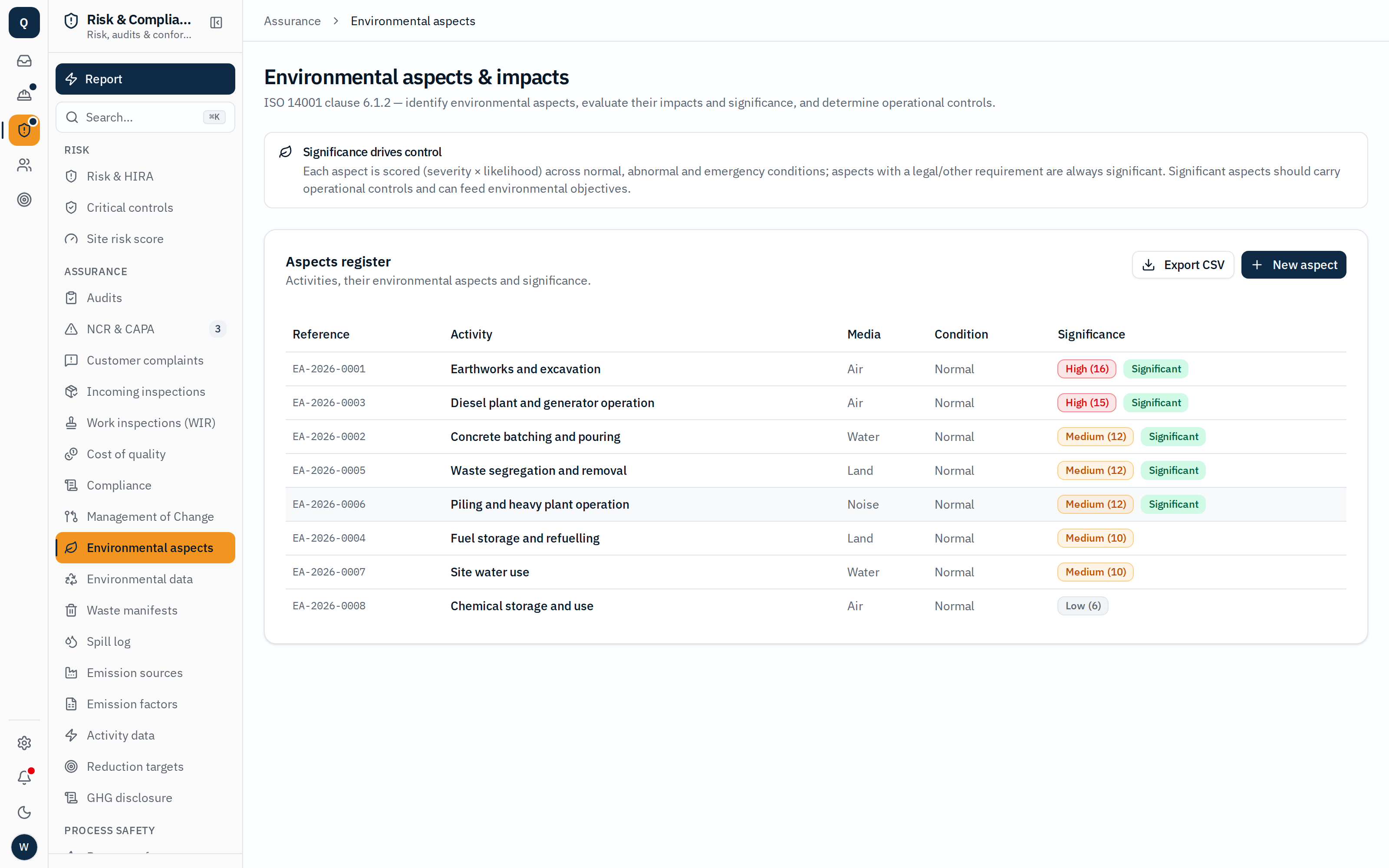
Significance you can defend
Aspects are scored on severity and likelihood into a significance level, with the operational controls recorded against each.
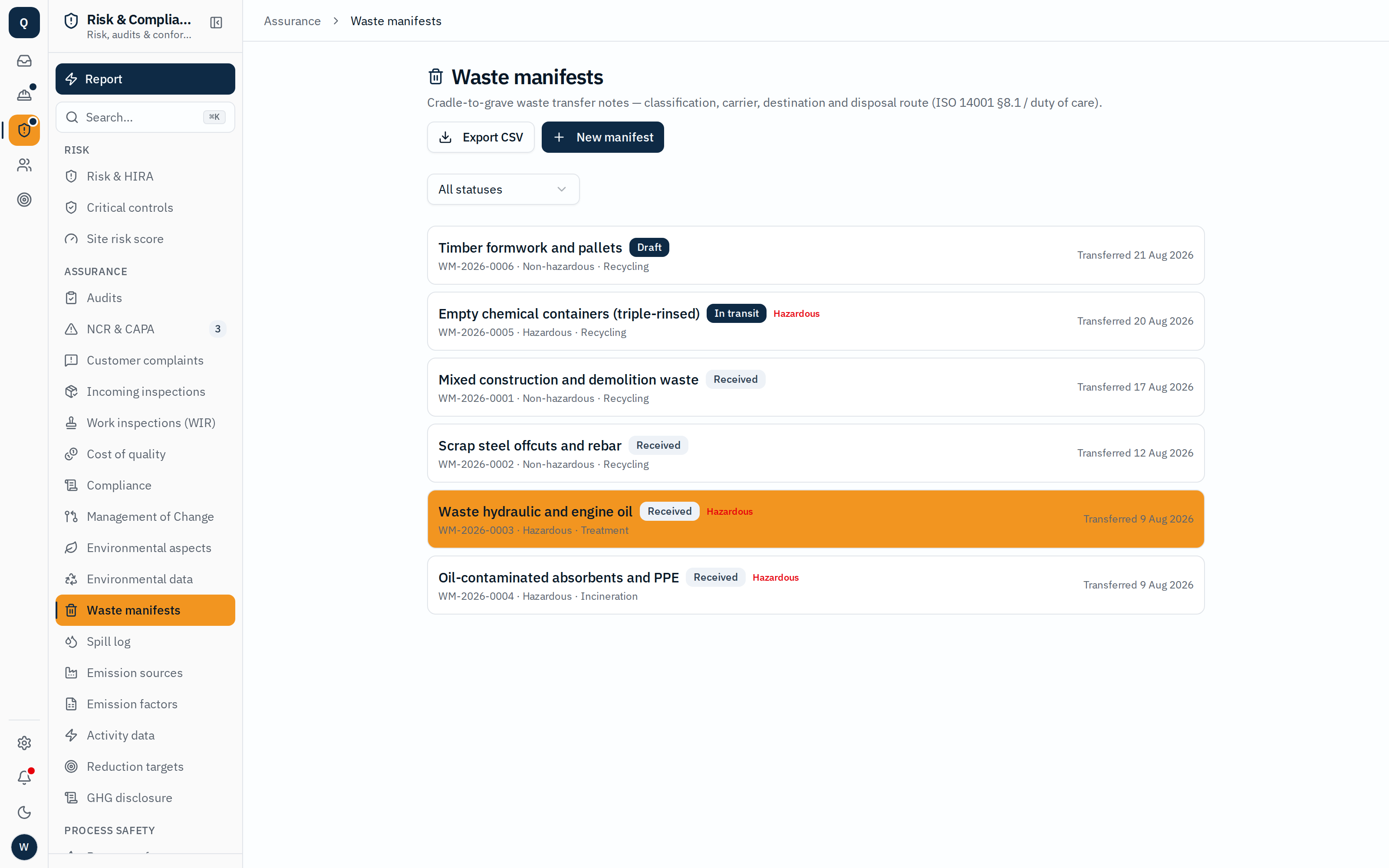
Cradle-to-grave waste traceability
Every consignment carries its code, carrier, destination and disposal route, so the waste register reconciles against transfer notes.
Performance data that trends
Energy, water, waste and emissions logged per period give you clause 9.1.1 monitoring rather than an annual scramble.
What you get
5 screens in the product — every image below is the real application.
Environmental Management
Environmental aspects & impacts
Identify aspects, evaluate impacts and significance, and determine the operational controls that apply.
ISO 14001 §6.1.2
Environmental Management
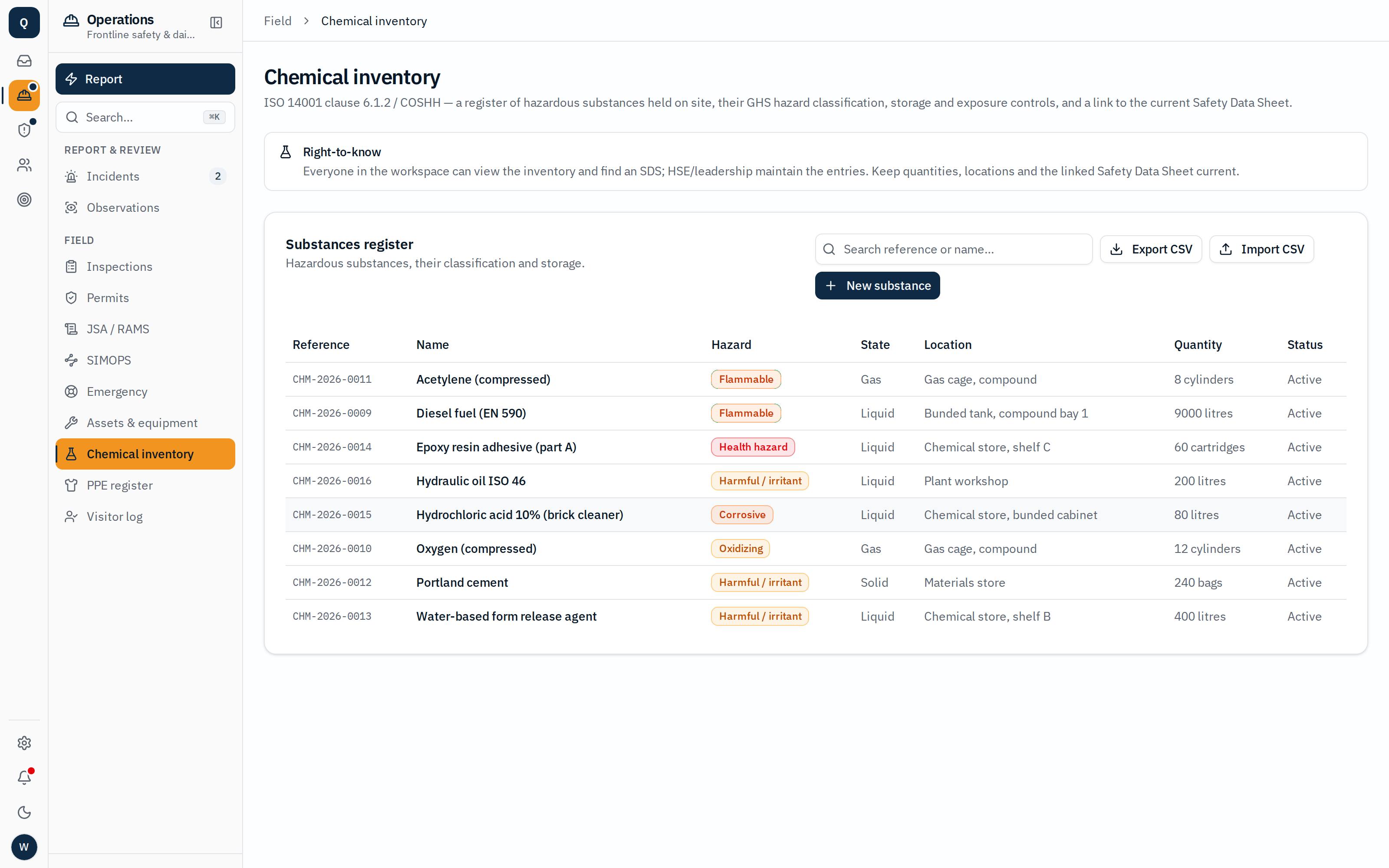
Chemical inventory
Hazardous substances held on site with GHS hazard classification, storage and exposure controls, and a link to the current Safety Data Sheet.
ISO 14001 §6.1.2 / COSHH
Environmental Management
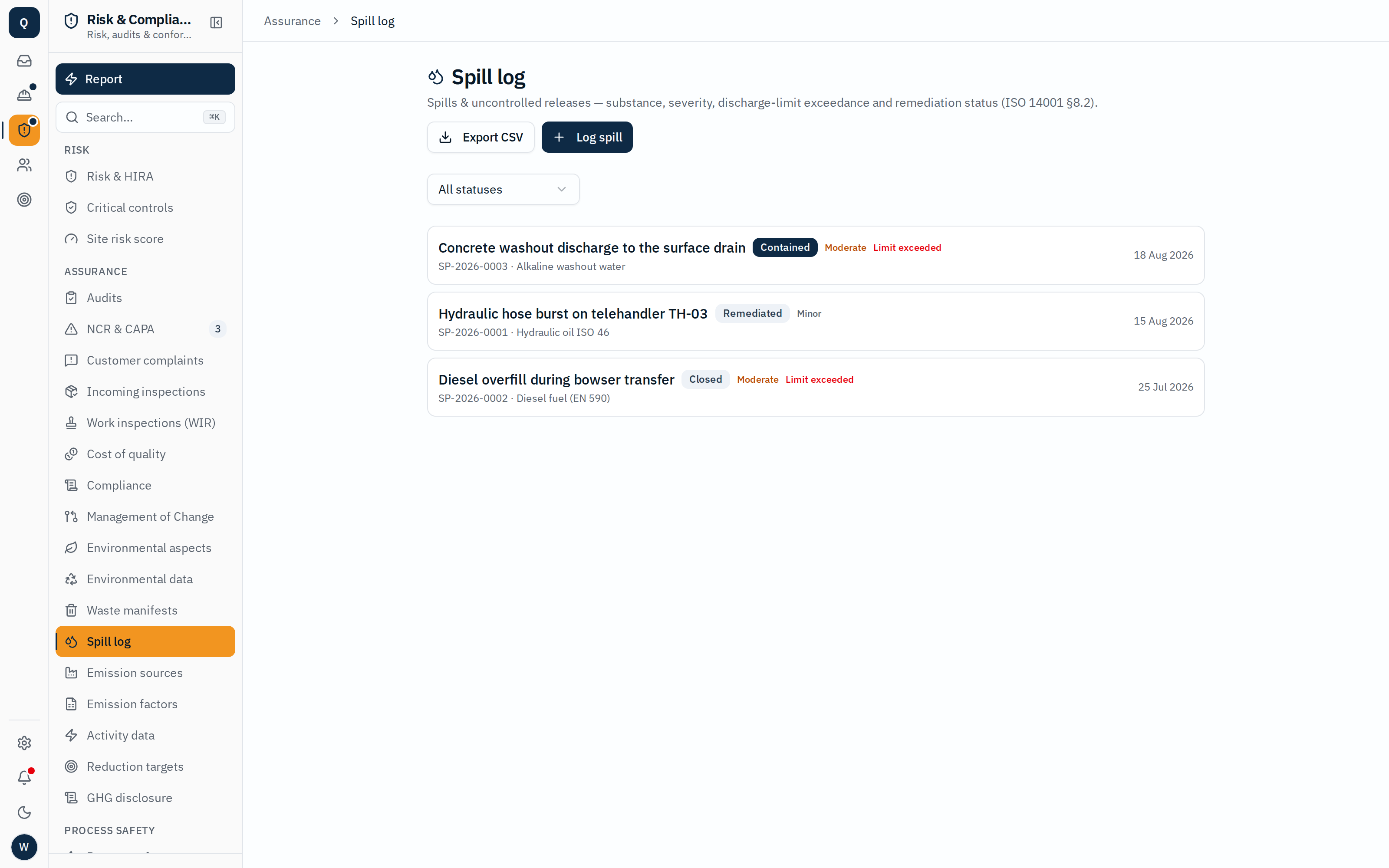
Spill log
Spills and uncontrolled releases — substance, quantity, containment, root cause and whether the regulator was notified.
Environmental Management
Waste manifests
Cradle-to-grave waste transfers with classification, carrier, destination and disposal method.
Environmental Management
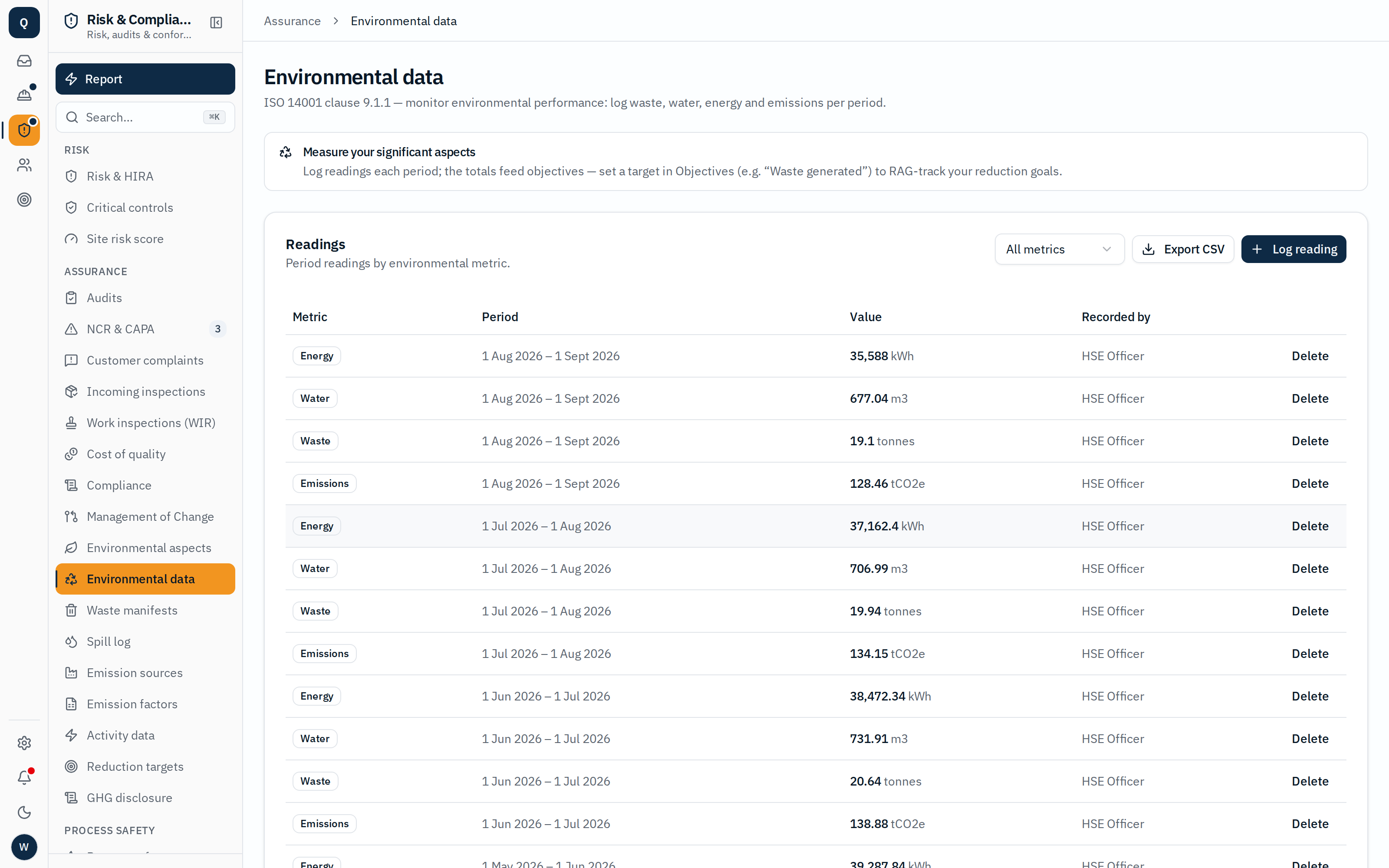
Environmental performance
Monitor environmental performance: log waste, water, energy and emissions per period.
ISO 14001 §9.1.1
See Environmental Management on your own processes
Book a 30-minute walkthrough and we will map it to your standards, your sites and your team structure.